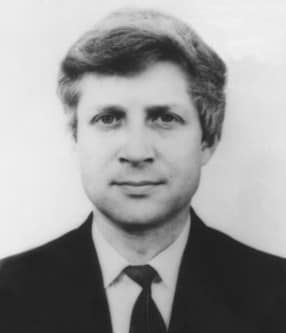
Nikolai Kardashev, creator of the civilization ranking scale, outstanding space explorer, specialist in experimental and theoretical astrophysics and radio astronomy, Doctor of Physical and Mathematical Sciences, Director of the Astro Space Center of the Lebedev Physical Institute, died in August 3, 2019. The Russian scientist was 87 years old.
The scientist’s most famous work is the Kardashev Scale — the cosmic civilization ranking system. As part of the Search for Extraterrestrial Intelligence (SETI), he proposed a model of cosmic civilisations and calculated the scale of ranking civilisations
The Kardashev Scale
In 1963, he studied the quasar CTA-102. It was the first contribution of Soviet scientists to SETI, since the radio source CTA-102 was first assumed to be evidence of an extraterrestrial civilization.
In his paper ‘Transmission of Information by Extraterrestrial Civilisations’, published in 1964, Kardashev explored the idea that other galactic civilisations may have existed for billions of years before ours, so they would be far more advanced. He proposed a theoretical scale of technological development of civilisations based on the amount of energy that civilization is able to utilize. According to the theory, there are 3 main types of advanced civilisations:
Type I: Planetary Civilization
A civilisation that can use and store all the energy available on its planet — a small fraction of a star’s energy emissions that reach the surface. In the case of Earth and the Sun that’s about 1016 watts. For now, humanity has not quite reached Type I civilisation status, consuming only about 1012 watts.
Type II: Stellar Civilization
A civilization in possession of resources of its parental star and could control the energy in their solar system, by exploiting the total energy output of the star. Such a civilization could meet its energy requirements by building an equivalent of what is known as the Dyson sphere, a number of structures that surround a star in a dense formation to capture a large percentage of its power output, making available 1026 watts of energy. The concept was proposed by American physicist and mathematician Freeman Dyson in 1960.
Type III: Galactic Civilization
A civilization that has evolved so far it possess the energy resources of their entire galaxy. This would give a further increase in energy consumption to at least 1036 watts.
The author of the theory didn’t suppose that further increase in energy consumption is possible, so he didn’t propose a Type IV.
The Kardashev Scale is used by physicists and futurists all over the world to this day. Michio Kaku, professor of theoretical physics and futurist in his book ‘Physics of the Future’, claims that humanity may attain Planetary Civilization status in just 100 years. Carl Edward Sagan, American astronomer, astrobiologist and astrophysicist supported the theory, too, however, pointed out that the energy gaps between Kardashev’s civilization types of were so great that the scale might need to be refined with additonal ranking
Becoming an Astrophysics legend
However, his contribution to the Search for Extraterrestrial Intelligence isn’t the only achievement the scientist is worth to be remembered for. Kardashev produced pioneering work on low frequency cosmic radiation that started a new era in radio astronomy, he conducted numerous experiments and took part in telescope developments, studied the active nuclei of galaxies, quasars, and stellar systems.
In the early 1960s, Kardashev predicted the discovery of pulsars — highly magnetized rotating neutron stars that emit electromagnetic radiation. The radiation can be observed only when the beam of emission is pointing toward Earth and is responsible for the pulsed appearance of emission.
One of his latest contributions to science was the work on the radio telescope Spektr-R, launched in 2011 to perform research on the structure and dynamics of radio sources in our galaxy and beyond.