ROCHESTER, N.Y. (WHEC) — Monroe County Public Health Commissioner Dr. Michael Mendoza Tuesday announced new COVID-19 variants have been found in Monroe County.
Mendoza announced that two cases of the UK variant and a small sample of the California variant were found in Monroe County in some older cases from February.
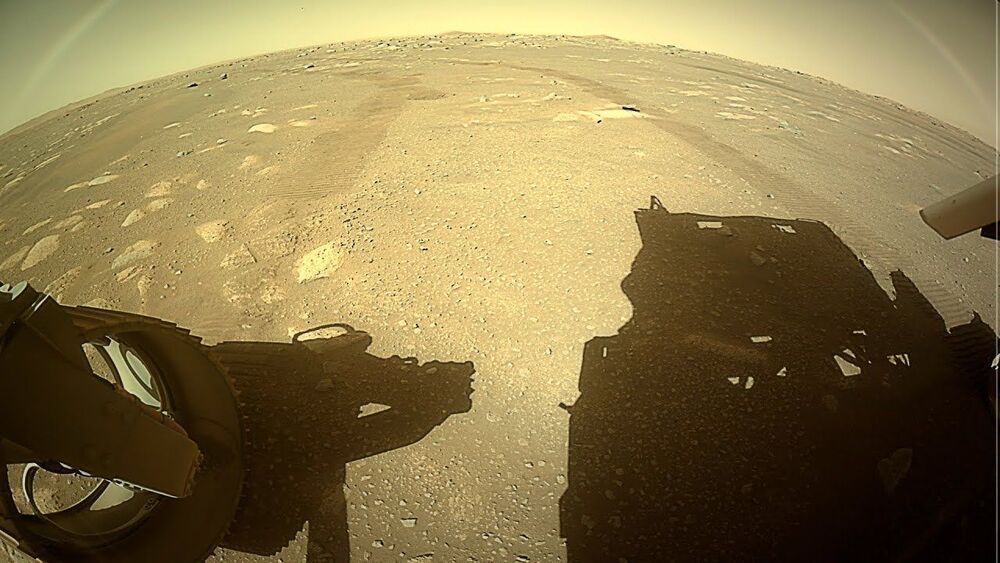
On March 232021 NASA demonstrated Mars Helicopter Ingenuity’s deployment area/place and Perseverance Rover drives directly to Helipad (helicopter deployment site). Ingenuity is nestled up sideways under the belly of the Perseverance rover, with a cover to protect it from the debris kicked up during landing. General thing for successful flight of Mars Helicopter is Space weather. It relates to effects of our Sun’s radiation on Ingenuity. Everything on Mars, including Ingenuity, is bathed in a background of cosmic rays (high energy particles) from our Milky Way galaxy as well as particles from the Sun. When the Sun has a large flare and ejects electrically-charged particles (a so-called coronal mass ejection), the particles travel at high speed toward Mars and Ingenuity, following the Sun’s magnetic lines of force. As our helicopter has a number of elements that are not specifically engineered to be highly robust to these particles, we keep an eye on solar weather events. If such an event is predicted, and is of very large magnitude, we would possibly delay operating Ingenuity for a day or two to let the surge of particles pass by.
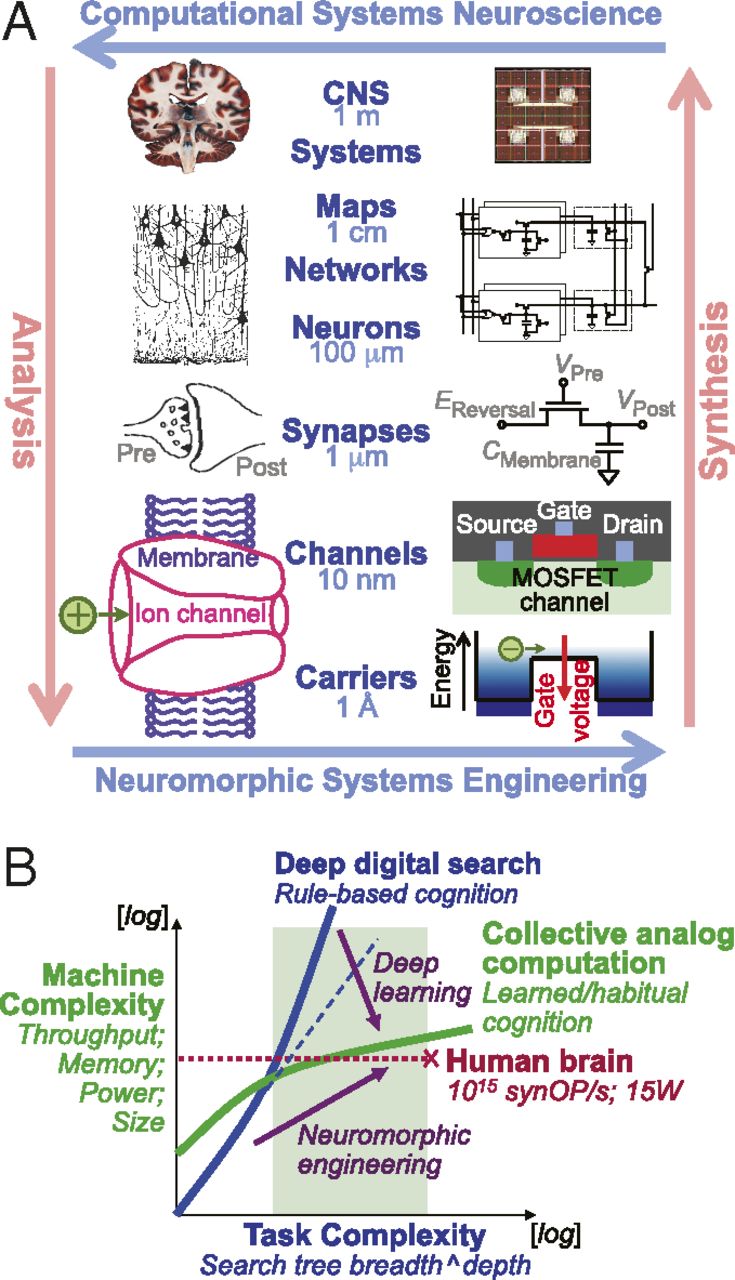
One of the greatest aspirations of the human mind has been to realize machines that surpass its cognitive intelligence. The rapid expansion in computing power, about to exceed the equivalent of the human brain, has yet to produce such a machine. The article by Neftci et al. in PNAS (1) offers a refreshing and humbling reminder that the brain’s cognition does not arise from exacting digital precision in high-performance computing, but rather emerges from an extremely efficient and resilient collective form of computation extending over very large ensembles of sluggish, imprecise, and unreliable analog components. This observation, first made by John von Neumann in his final opus (2), continues to challenge scientists and engineers several decades later in figuring and reproducing the mechanisms underlying brain-like forms of cognitive computing.
Related developments are currently unfolding in collaborative initiatives engaging scientists and engineers, on a grander scale, in advancing neuroscience toward understanding the brain. In parallel with the Human Brain Project in Europe, the Brain Research through Advancing Innovative Neurotechnologies Initiative promises groundbreaking advances in enabling tools for revolutionizing neuroscience by developing nanotechnology to probe brain function at greatly increased spatial and temporal detail. Engineers are poised to contribute even further in revolutionizing such developments in neuroscience. In this regard it is helpful to relate the inquisitive nature of science—analysis—to the constructive power of engineering, synthesis.
M.I.T. scientist Sebastian Seung describes the audacious plan to find the connectome—a map of every single neuron in the brain. Here, he says, is the secret of human identity.
The research team, led by Todd Lencz, PhD, with Itsik Pe’er, PhD, Tom Maniatis, PhD, and Erin Flaherty, PhD, of Columbia University, carried out a genetic study identifying a single letter change in the DNA code in the PCDHA3 gene that is associated with schizophrenia. The affected gene makes a type of protein called a protocadherin, which generates a cell surface “barcode” required for neurons to recognize, and communicate with, other neurons. They found that the PCDHA3 variant blocks this normal protocadherin function.
The discovery was made possible by the special genetic characteristics of the samples studied by Lencz’s team—patients with schizophrenia and healthy volunteers drawn from the Ashkenazi Jewish population. The Ashkenazi Jewish population represents an important population for study based on its unique history. Just a few hundred individuals who migrated to Eastern Europe less than 1000 years ago are the ancestors of nearly 10 million Ashkenazi Jews today. This lineage, combined with a tradition of marriage within the community, has resulted in a more uniform genetic background in which to identify disease-related variants.
“In addition to our primary findings regarding PCDHA3 and related genes, we were able— due to the unique characteristics of the Ashkenazi population—to replicate several prior findings in schizophrenia despite relatively small sample sizes,” said Lencz, professor in the Institute of Behavioral Science at the Feinstein Institutes. “In our study, we demonstrated this population represents a smart, cost-effective strategy for identifying disease-related genes. Our findings allow us to zero in on a novel aspect of brain development and function in our quest to develop new treatments for schizophrenia.”
It is well established that rare, damaging genetic variants with strong effects contribute to autism. Although individually rare, these variants are collectively common: Clinical genetic testing identifies them in at least 25 percent of autistic people. Studies of these variants have implicated more than 100 genes — and counting — in autism.
Identifying these genes is important — not only for clinical care, but also for advancing our understanding of the neural circuits and processes involved in autism or in its core traits. It creates the opportunity to develop therapies targeted to specific molecular diagnoses. And as we learn more about these genes and the consequences of variants that disrupt their function, we have the potential to better understand the mechanisms underlying cases of autism in which a definitive genetic diagnosis cannot yet be made.
Join the Transdisciplinary Agora for Future Discussions, Inc. — TAFFD’s.
A bi-weekly virtual town hall-like show presenting in-depth discussions on issues connected to African advancement in the 21st century ranging from science, technology, … See More.
– Mission. Creating a space for discussions on ideas and issues related to the African condition, and develop a suitable narrative through multidimensional approaches to drive progress in Africa towards a sustainable and more prosperous future.
Vision. Building from the present and critically reconstructed African past for a greater, highly advanced, cosmopolitan, peaceful, and prosperous future African civilization through meaningful and fruitful discourse and action.
Holding: TAFFD’s Africa. Host: Chogwu Abdul.
Objectives. To steer discourse and action for a needed cultural, scientific, and technological revolution in 21st century Africa. To provide global exposure for African skills and innovations to opportunities for investments and industrial growth. To provide a platform for dialogues towards creative solutions to contemporary African problems; social, political, and economic. To drive consciousness and initiatives for conceptual, material, and infrastructural transformations necessary in actualizing the Fourth Industrial Revolution in Africa. To promote Afrofuturism as a movement and philosophy of history, science, and development relevant for significant transformations and advancement in the technology, culture, and economy of Africa. To pursue the vision of an African Enlightenment through the provision of an intellectual environment for stimulation and exchange of knowledge and ideas.
Mode of Execution. The Africa Town Hall meetings will be conducted virtually, presumably as Zoom conferences, and streamed live on various TAFFD’s social media platforms. Each session will consist of a focus either on a topical issue, idea, event, or institution(s) related to Africa and feature a panel of discussants (experts/resource persons drawn from diverse relevant fields) alongside an audience. The themes of discussion can range from science, technology, medicine, innovations, business, industry, education, art, creativity, entertainment, culture, politics, current affairs, futurism, etc., as connected to the African experience. Each session further can either be a focus on a situation in a particular African country, the African continent/condition in general, the experience of Africans in Diaspora, or on a global issue/event as viewed from an African perspective or in the context of its implications for Africa. Upon some necessary editing of the virtual meetings, these sessions may be developed/produced and uploaded as podcasts/videos on YouTube and/or other sites for wider public consumption. Schedule. Bi-weekly (i.e., once every two weeks and twice a month). 1st and 3rd Friday of every month at 18:00 WAT. A one-hour (1 hour) program. We help prepare people’s minds by talking about the current advantages of this new paradigm and what the future entails using a trans-disciplinary approach that is transposed through the TAFFD’s Quarterly Journal, TAFFD’s annual Magazine, TAFFD’s International/Local Conferencing, TAFFD’s Awards, and TAFFD’s Teens divisions of our organization.
TAFFD’s is grateful & honored to be supported/endorsed by the Lifeboat Foundation, USTP, International Longevity Alliance, Open Source Mode, Emerge, Aubrey de Grey, Catherine Demetriades, and by many people who wish to change the world through the proper use of technology.
This progressive trance set is labeled SYNTELLECTUS and is inspired by The Syntellect Hypothesis, a recent best-selling book of mine… If you remember, SYNTELLECTUS refers to a neologism Holo Syntellectus — a new hybrid species emerging as a syntellect, [phase-transitioning to] one global mind… Enjoy!
https://youtu.be/P8QQz3jzsxI (((Subscribe to EM Channel!)))