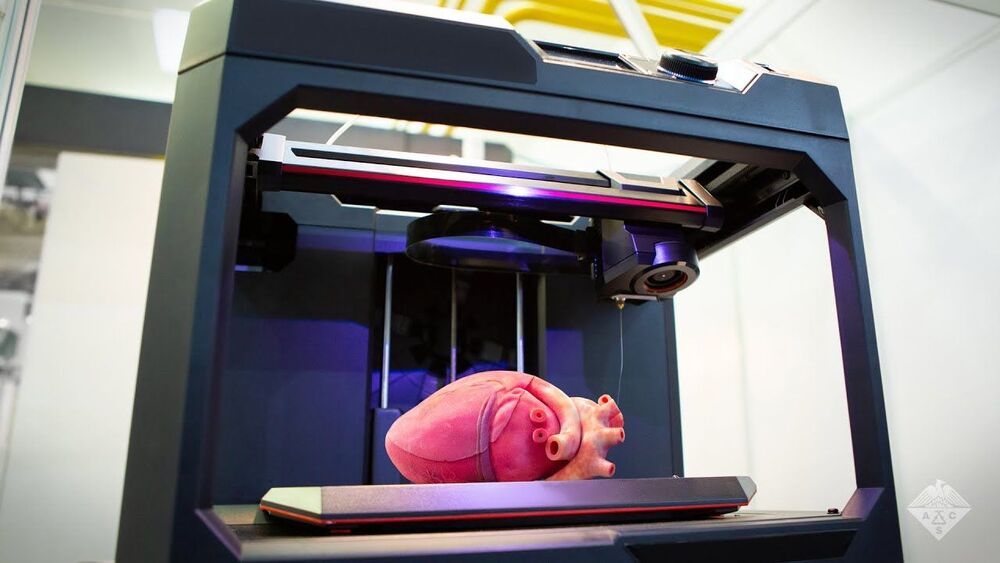
The FRESH technique of 3D bioprinting was invented in Feinberg’s lab to fill an unfilled demand for 3D printed soft polymers, which lack the rigidity to stand unsupported as in a normal print. FRESH 3D printing uses a needle to inject bioink into a bath of soft hydrogel, which supports the object as it prints. Once finished, a simple application of heat causes the hydrogel to melt away, leaving only the 3D bioprinted object.
While Feinberg, a professor of biomedical engineering and materials science and engineering, has proven both the versatility and the fidelity of the FRESH technique, the major obstacle to achieving this milestone was printing a human heart at full scale. This necessitated the building of a new 3D printer custom made to hold a gel support bath large enough to print at the desired size, as well as minor software changes to maintain the speed and fidelity of the print.
OSAKA – An Osaka University team said it has carried out the world’s first transplant of cardiac muscle cells created from iPS cells in a physician-initiated clinical trial.
In the clinical project to verify the safety and efficacy of the therapy using induced pluripotent stem cells, Yoshiki Sawa, a professor in the university’s cardiovascular surgery unit, and colleagues aim to transplant heart muscle cell sheets over the course of three years into 10 patients suffering from serious heart malfunction caused by ischemic cardiomyopathy.
Summary: Neuroinflammation may be a key player in the pathological brain changes produced as a result of chronic opioid use. Microglia is likely responsible for the majority of the changes.
Source: boston university school of medicine.
Prevalence rates of opioid use disorder (OUD) have increased dramatically, accompanied by a surge of overdose deaths–nearly 50000 in the U.S. in 2019. While opioid dependence has been extensively studied in preclinical models, an understanding of the biological alterations that occur in the brains of people who chronically use opioids and who are diagnosed with OUD remains limited.
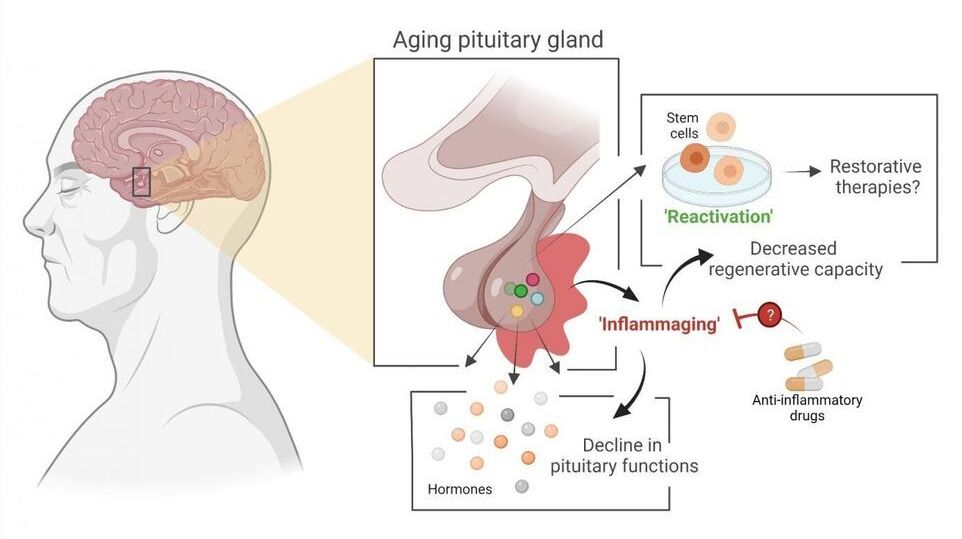
Stem cell biologist Hugo Vankelecom (KU Leuven) and his colleagues have discovered that the pituitary gland in mice ages as the result of an age-related form of chronic inflammation. It may be possible to slow down this process or even partially repair it. The researchers have published their findings in PNAS.
The pituitary gland is a small, globular gland located underneath the brain that plays a major role in the hormonal system, explains Professor Hugo Vankelecom from the Department of Development and Regeneration at KU Leuven. “My research group discovered that the pituitary gland ages as a result of a form of chronic inflammation that affects tissue and even the organism as a whole. This natural process usually goes unnoticed and is referred to as ‘inflammaging’—a contraction of inflammation and aging. Inflammaging has previously been linked to the aging of other organs.” Due to the central role played by the pituitary, its aging may contribute to the reduction of hormonal processes and hormone levels in our body—as is the case with menopause, for instance.
The study also provides significant insight into the stem cells in the aging pituitary gland. In 2012, Vankelecom and his colleagues showed that a prompt reaction of these stem cells to injury in the gland leads to repair of the tissue, even in adult animals. “As a result of this new study, we now know that stem cells in the pituitary do not lose this regenerative capacity when the organism ages. In fact, the stem cells are only unable to do their job because, over time, the pituitary becomes an ‘inflammatory environment’ as a result of the chronic inflammation. But as soon as the stem cells are taken out of this environment, they show the same properties as stem cells from a young pituitary.”
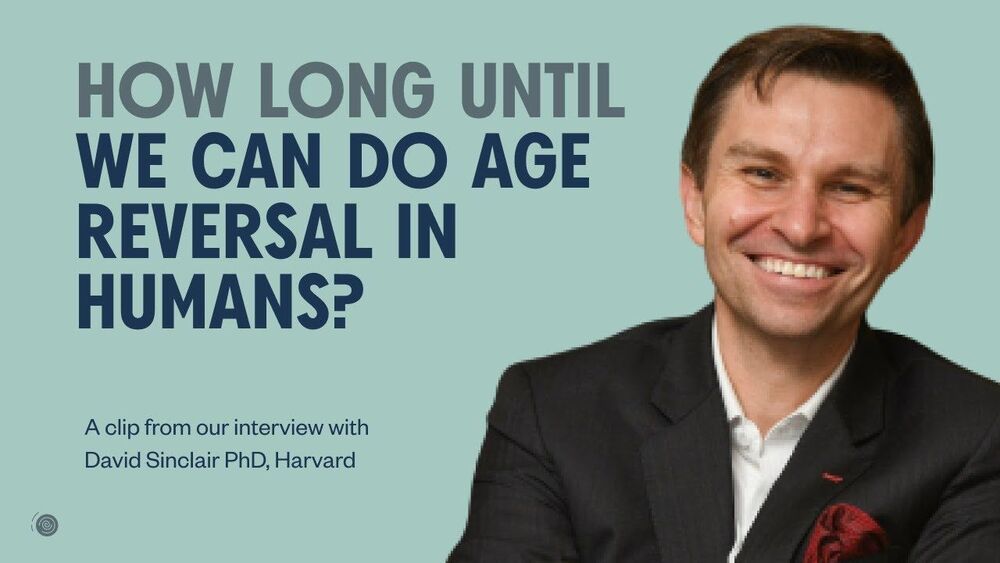
In a minute and 27 seconds we get the what from an eye regeneration for mice, to monkey trials to start later this year, to human trials by 2023, and full body in a decade.
David Sinclair—a world-leading biologist, Harvard Medical School Professor, and author of The New York Times best-selling book @Lifespan.
🧬 His work on understanding why we age and how to slow down the aging process has contributed significantly to getting the longevity science to where it is today. David’s numerous discoveries have been published in the most respected scientific journals. He co-founded many biotech companies, including Life Biosciences, MetroBiotech, and InsideTracker.
🧬 David has received more than 25 awards and honors for his research. He was included in TIME Magazine’s list of the “100 most influential people in the world” in 2014 and “50 Most Influential People in Health Care” in 2018.
🧬 David and his colleagues have recently published a Nature paper with extraordinary results of their epigenetic reprogramming therapy that has successfully restored vision in mice. The paper has become the most accessed paper in the past 12 months at the journal.
If you like this clip and want to watch the full episode be sure to join our Longevity Ambassador list. Every month, co-hosts Sourav Sinha and Sergey Young sit down with a longevity pioneer or healthcare experts to dive deep into the science, investing and technological breakthroughs of aging.
Sign up here: https://sergeyyoung.com/ama-list.
Follow me on Instagram: https://www.instagram.com/sergeyyoung200/
This article is an excerpt from a report by Partners in Foresight, The Home of the 2020s: Scenarios for How We Might Live in the Post-Pandemic Future.
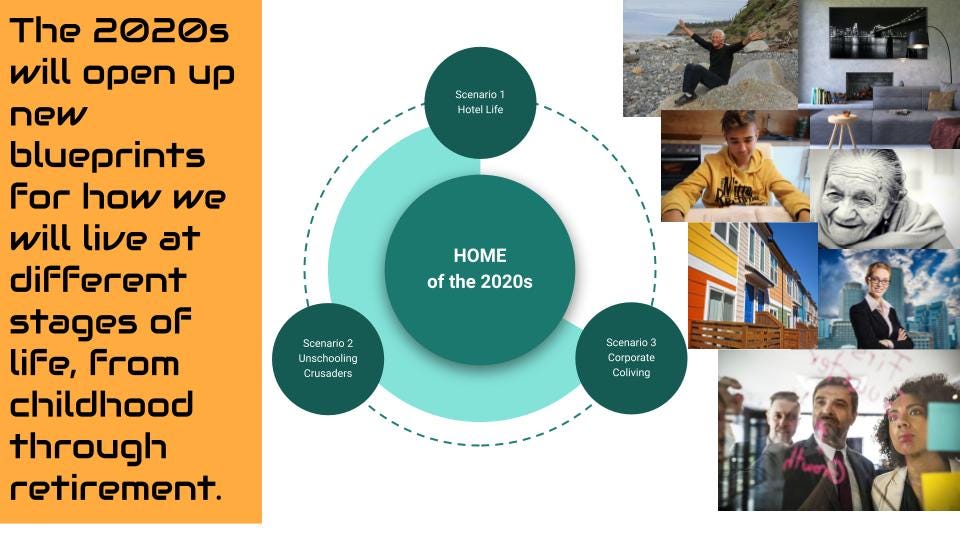
Scenario Vignette 1: Hotel Life
Hotels and abandoned malls become pandemic-proof senior citizen communities
Travel and retail sectors were never the same after the 2020 disruptions. It was not that they never recovered, but they were never the same.
By 2030, a glut of abandoned real estate (hotel, entertainment, and retail that had succumbed to economic pressures of the pandemic) had become gradually renovated to accommodate a growing North American retirement population. They borrowed pandemic-proofing ideas from communities in China built in response to COVID-19 and retrofitted blueprints of housing designed for Mars colonization. Futuristic concepts were thrown at a single social problem: how to build safe, sustainable, and economical retirement communities and nursing homes.
The living arrangement could provide adventure, allowing for a surprising variety of movement and mobility. Hotels became more like timeshares where residents would move (in clusters, aka “pods”) from place to place, seasonally sometimes. The once-thriving international tourism economy still sputtered in 2030, but groups of older Americans revitalized the classic recreational hotspots of the 20th century (Yellowstone, the Grand Canyon, the Great Smoky Mountains). Older people who had survived had become precious members of society after the pandemic and they were seen as honored guests at all national landmarks.
For less mobile seniors, outdated malls were transformed to indoor cities with clinics, exercise trails, and community kitchens all within hundreds of steps of where seniors slept in dormitory-like rooms. Green renovations to the buildings themselves allowed for indoor gardening/farms and many of the cooperatives had a net-zero impact thanks to effective sustainable design elements. Senior citizens were well-looked after by respectful physicians, social workers, and health care professionals in these settings. Young people often volunteered to help out. There was recreation and education for all ages and abilities, and it was given freely to anyone over age 65. The operations were fully funded by taxes (US $0.01) on e-commerce retail transactions.
Scenario Vignette 2: Unschooling Crusaders
A generation embraces homeschooling in lockdown
Edgar is a 15-year-old American boy who, for as long as he could remember, has been homeschooled by his parents who were working from home.
They never dropped him off in a school carpool line or packed him a lunch to eat away from home. Instead, the entire family found a different rhythm in the wake of the 2020 Covid-19 pandemic. Edgar was only five years old in 2020, so he lacks memory of a time before his parents worked at home and helped him take online classes.
In his early teenage years, Edgar’s interests began to surpass any existing online school curriculum. His parents transitioned him to an unschooling approach, letting Edgar pursue his passions rather than a pre-established curriculum. With his parents’ support, Edgar is now planning to enter college early and has started a nonprofit organization to support ecological and social justice.
A lot of kids in Edgar’s generation discovered unschooling because of the pandemic. It wasn’t just the healthcare systems that were overwhelmed in 2020 America; public school systems were, too. Edgar and some of his peers were lucky to have parents that worked from home during the lockdowns. Their classmates that didn’t have such privilege lost everything when schools closed. Some fell behind academically, some got sick, and some disappeared completely. Many of their parents worked in retail, restaurants, travel, and various “essential” jobs.
Unschoolers like Edgar were actually drawn to unschooling when they noticed the vastly different experiences they and their friends had in their early years even though they were in the same public school systems at the time. Unschooling, an unlikely school reform movement, was on its way by 2030…with young people in charge of their own learning.
Scenario Vignette 3: Corporate Coliving
Class of 2030 MBA grad moves into a communal home sponsored by her employer
After the pandemic, the US higher education system was a disaster. Student loans had been forgiven and eliminated by 2025 and a lot of new options to finance college had appeared.
A student called Haley opted for the sponsorship route — the Big4 consulting group had prescreened students from her high school and Haley had been selected to be sponsored at a university and housed after graduation. All she had to do was accept a 10-year assignment with Big4 after college at a subsistence salary (45% less than a non-coliving salary), and all her living expenses would be covered. Even in college and throughout grad school all of Haley’s meal, housing, and transportation expenses were subsidized by the corporation which she’d later call work and home. Part of the way the company paid the tuition of their future employees was by eliminating office space altogether.
They’d once occupied vast and palatial offices in urban centers around the globe. Instead, Big4 had put their money into coliving/coworking spaces starting in 2020. Having early access to the talent pipeline ensured a smooth transition and, as a plus, kept training costs down. Housing and feeding employees had shown to be a much better business proposition than generous salaries, according to the Big4 shareholders.
Haley daydreamed on her way to meet a date at the café. Although she’d been out of the bubble a few times, she mostly stayed within a group of coworkers with similar jobs, upbringings, and educational backgrounds. It dawned on her now that coliving, which sprung from the economic and psychological aftermath of COVID-19, could seem highly social but was actually incredibly isolating. She remembered a popular meme she had seen often as a teen during the 2020 lockdown that showed a flustered figure standing in a messy room, asking: “Am I working at home or living at work?” Even in 2030, no one knew the answer.
View the full report The Home of the 2020s: Scenarios for How We Might Live in the Post-Pandemic Future: https://bit.ly/2TbCYf2
The resulting implant consists of cells attached to the scaffold, which permits the targeted delivery of therapeutic cells to the diseased region within the eye. A non-cryopreserved formulation of this cellular therapy is being employed in an ongoing Phase I/IIa clinical trial sponsored by RPT. The cryopreserved formulation enabled by the work of Pennington and colleagues will facilitate anticipated Phase IIb and Phase III clinical trials as well as ultimate commercialization and clinical application of the product.
Scientists at UC Santa Barbara, University of Southern California (USC), and the biotechnology company Regenerative Patch Technologies LLC (RPT) have reported new methodology for preservation of RPT’s stem cell-based therapy for age-related macular degeneration (AMD).
The new research, recently published in Scientific Reports, optimizes the conditions to cryopreserve, or freeze, an implant consisting of a single layer of ocular cells generated from human embryonic stem cells supported by a flexible scaffold about 3×6 mm in size. This implant is currently in clinical trial for the treatment of AMD, the leading cause of blindness in aging populations. The results demonstrate that the implant can be frozen, stored for long periods and distributed in frozen form to clinical sites where it is designed to be thawed and immediately implanted into the eyes of patients with macular degeneration. The capacity to cryopreserve this and other cell-based therapeutics will extend shelf life and enable on-demand distribution to distant clinical sites, increasing the number of patients able to benefit from such treatments.
The report published by lead author Britney Pennington and colleagues achieves a milestone that brings ocular implants one step closer to the clinic. “This is the first published report that demonstrates high viability and function of adherent ocular cells following cryopreservation, even after long-term frozen storage,” said Pennington, head of process development at RPT and assistant project scientist at UC Santa Barbara.
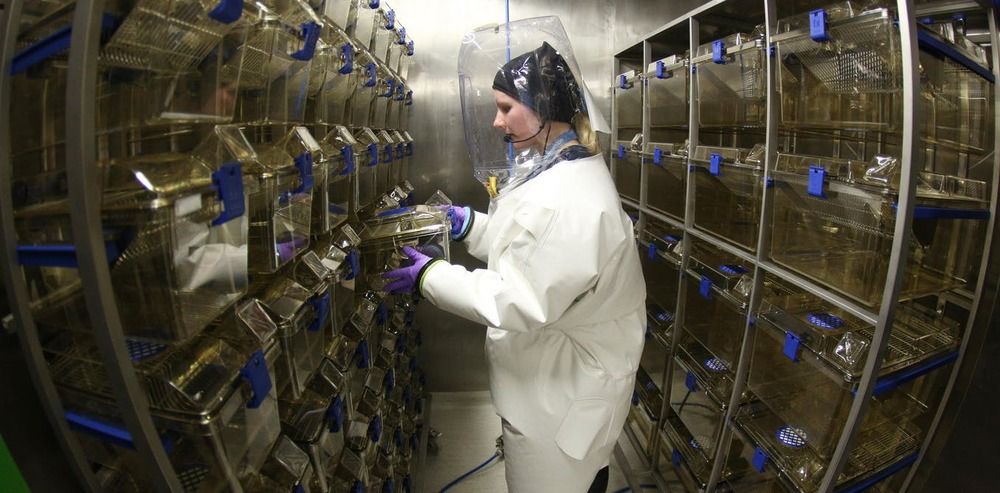
Not the most informative article, but it does have a map giving you an idea of how many of these facilities exist and in which countries. China is not the only place with labs.
Three of the 23 countries with BSL4 labs (Australia, Canada and the US) have national policies for oversight of dual-use research. At least three other countries (Germany, Switzerland and the UK) have some form of dual-use oversight, where, for instance, funding bodies require their grant recipients to review their research for dual-use implications.
Rising demand for BSL4 labs
That still leaves a large proportion of scientific research on coronaviruses carried out in countries with no oversight of dual-use research or gain-of-function experiments. This is particularly concerning as gain-of-function research with coronaviruses is likely to increase as scientists seek to better understand these viruses and to identify which viruses pose a higher risk of jumping from animals to humans or becoming transmissible between humans. More countries are expected to seek BSL4 labs, too, in the wake of the pandemic as part of a renewed emphasis on pandemic preparedness and response.