Though the Earth’s deeper layers have been raging at thousands of degrees for billions of years, new research involving Florida Tech has shown that tapping into that heat to produce geothermal heating for urban regions on the surface has a far, far shorter lifespan.
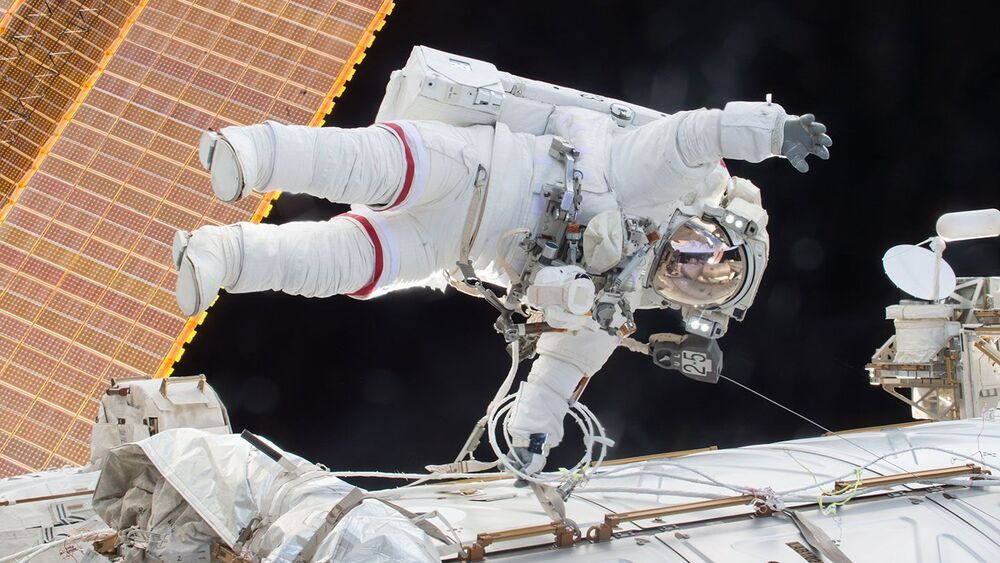
Biochemical changes after going to space suggest that harm to cells’ energy-producing structures, called mitochondria, could explain astronauts’ health issues.
Jared Isaacman invites you to join the fight against childhood cancer, and possibly wind up with a seat on the first orbital flight by an all-civilian team of astronauts.
Research into a new drug that primes the immune system in the respiratory tract and is in development for COVID-19 shows it is also effective against rhinovirus.
Rhinovirus is the most common respiratory virus, the main cause of the common cold and is responsible for exacerbations of chronic respiratory diseases such as asthma and chronic obstructive pulmonary disease. In a study recently published in the European Respiratory Journal, the drug, known as INNA-X, is shown to be effective in a pre-clinical infection model and in human airway cells.
Treatment with INNA-X prior to infection with rhinovirus significantly reduced viral load and inhibited harmful inflammation.
In this video I show how I made a self-organisating network of Kuramoto-style oscillators in a system undergoing metaheuristic-guided synchronization. There are also ways to visually demonstrate this with relatively simple hardware, such as using modified microelectronics, controlled using microcontroller circuits.
In this project, which I have dubbed “Feynman’s Quantum Fireflies” I program individual systems of oscillators which display discontinuous pas coupling which can be implemented in a network of transceiver circuits. Using the Path Integral Approach is one way to understand how the system behaves like a quantum thermal bath.
This example is a self-organising network of flashing optical transceiver circuits, each circuit containing and RGB LED and phototransistor.
Each circuit is programmed under a simple principle of discontinuous pas-coupling as discussed before to achieve synchronization but this results in behavior across the entire network space that is a collective emergent behavior that has not been explicitly programmed, it emerges as a discrete simulation of a pseudo-quantum system.
This emergent behavior of the network is in fact a visual demonstration of how the network regulates itself over time to the most energy efficient configuration possible, which is to the state of most uniform synchronisation.
We can understand this synchronized state as being the ground state of our whole system, which the set of oscillators wants to head towards.
When will the pandemic end? It’s the question hanging over just about everything since COVID-19 took over the world last year. The answer can be measured in vaccinations.
Bloomberg has built the biggest database of COVID-19 shots given around the world, with more than 108 million doses administered worldwide. U.S. science officials such as Anthony Fauci have suggested it will take 70% to 85% coverage of the population for things to return to normal. Bloomberg’s Vaccine Tracker shows that some countries are making far more rapid progress than others, using 75% coverage with a two-dose vaccine as a target.
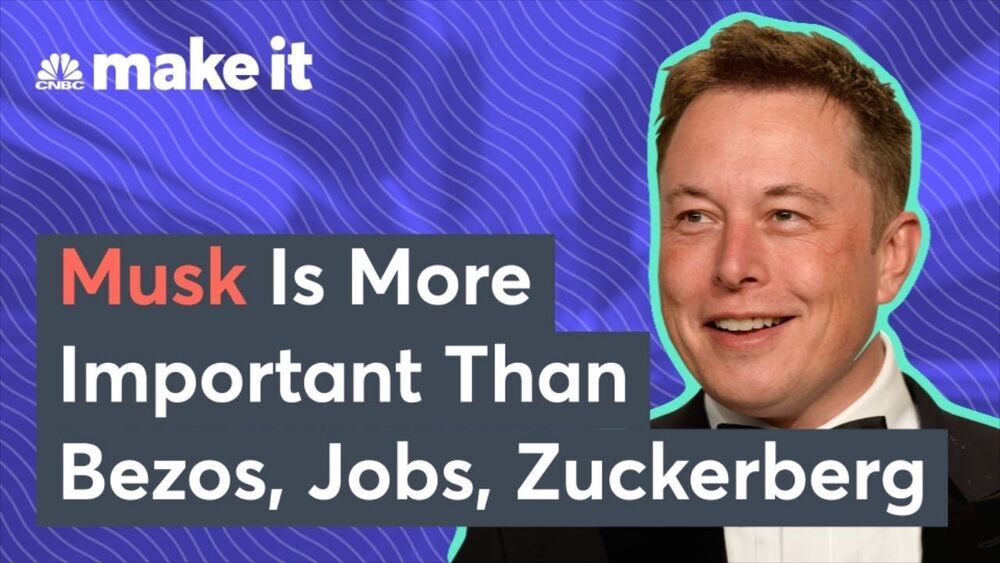
““As important as Steve Jobs was, here’s the difference: Elon Musk is trying to invent a future, not by providing the next app,” says renowned astrophysicist Neil deGrasse Tyson.
» Subscribe to CNBC Make It.: http://cnb.cx/2kxl2rf.
“What Elon Musk is doing is not simply giving us the next app that will be awesome on our smartphone,” deGrasse Tyson says. “No, he is thinking about society, culture, how we interact, what forces need to be in play to take civilization into the next century.”
Between Musk’s work at Tesla developing electric cars and his SpaceX plans to put humans on Mars by 2024 (and, eventually, to colonize the planet), the billionaire tech executive is attempting to revolutionize both human transportation and space exploration, deGrasse Tyson says.
Of course, as an astrophysicist and director of the Hayden Planetarium in New York, deGrasse Tyson might be expected to have a soft spot for Musk’s grand intergalactic plans. But deGrasse Tyson, who also hosts the show “StarTalk” on the National Geographic Channel, argues that space colonization could have a tremendous impact on civilization, potentially eliminating the need for warring over dwindling natural resources.
“Because there’s unlimited resources in space; resources that, on Earth, we fight wars over,” deGrasse Tyson tells CNBC Make It. “In space, you don’t need to fight a war, just go to another asteroid and get your resources. A whole category of war has the potential of evaporating entirely with the exploitation of space resources, which includes the unlimited access to energy as well.”
That’s the sort of universal issue that Musk is trying to tackle, deGrasse Tyson argues, which gives him the potential to have the greatest long-term effect on our civilization. “[H]e will transform civilization as we know it,” deGrasse Tyson says.