Welcome back to The TechCrunch Exchange, a weekly startups-and-markets newsletter. It’s broadly based on the daily column that appears on Extra Crunch, but free, and made for your weekend reading. Want it in your inbox every Saturday morning? Sign up here.
Earnings season is coming to a close, with public tech companies wrapping up their Q4 and 2020 disclosures. We don’t care too much about the bigger players’ results here at TechCrunch, but smaller tech companies we knew when they were wee startups can provide startup-related data points worth digesting. So, each quarter The Exchange spends time chatting with a host of CEOs and CFOs, trying to figure what’s going on so that we can relay the information to private companies.
The 21-digit solution to the decades-old problem suggests many more solutions exist.
What do you do after solving the answer to life, the universe, and everything? If you’re mathematicians Drew Sutherland and Andy Booker, you go for the harder problem.
In 2019, Booker, at the University of Bristol, and Sutherland, principal research scientist at MIT, were the first to find the answer to 42. The number has pop culture significance as the fictional answer to “the ultimate question of life, the universe, and everything,” as Douglas Adams famously penned in his novel “The Hitchhiker’s Guide to the Galaxy.” The question that begets 42, at least in the novel, is frustratingly, hilariously unknown.
International Criminal Police Organization (INTERPOL)… See More
Cyberspace by nature has no borders, which allows criminals to launch their attacks from anywhere in the world, at any time. As legal parameters are unable to keep up with the pace of technological proliferation, the absence of international laws capable of restricting the actions of attackers regardless of their geolocation gives these criminals a sense of absolute impunity. To counter this effectively, there is an urgent need to start learning the basics of working together.
What is Cyber Polygon?
Cyber Polygon is a unique cybersecurity event that combines the world’s largest technical training for corporate teams and an online conference featuring senior officials from international organisations and leading corporations.
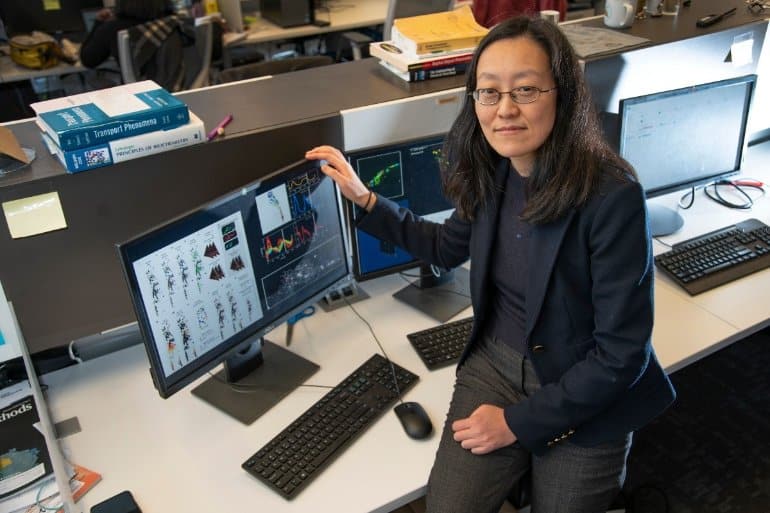
Summary: Using a range of tools from machine learning to graphical models, researchers have discovered a new way to identify cells and explore the mechanisms behind neurodegenerative diseases.
Source: Georgia Institute of Technology
In researching the causes and potential treatments for degenerative conditions such as Alzheimer’s or Parkinson’s disease, neuroscientists frequently struggle to accurately identify cells needed to understand brain activity that gives rise to behavior changes such as declining memory or impaired balance and tremors.
The remains reveal that Waal was between 35 and 50 years old when he died. Researchers used techniques including radiocarbon dating, stratigraphy and ceramic typology to determine that people buried him in around 726 A.D., the same year workers built the hieroglyphic staircase, notes Notimerica.
Prior to his death, Waal suffered from a variety of medical ailments. His skull was mildly flattened, and he was malnourished as a child, as evidenced by the “slightly porous, spongy areas known as porotic hyperostosis, caused by childhood nutritional deficiencies or illnesses” on the sides of his head, per the statement.
Scientists also found that infections, trauma, scurvy or rickets had triggered periostitis —chronic swelling and pain—to form in Waal’s arm bones.
Long but annotated! Most important here is human data for specific treatments due out starting in May or June. And apparently they had a mouse study where they expected a paper due out already but other groups chimed in to help with more testing so there is a delay.
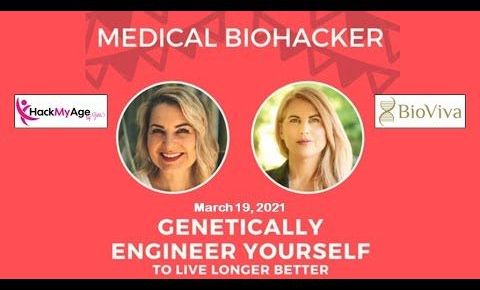
Liz Parrish, CEO of BioViva Science and patient zero of biological rejuvenation with gene therapies, is interviewed by Zora Benhamou on her fresh podcast “HackMyAge”.
During the conversation, Liz enters deep into the world of gene therapies, either to cure monogenic diseases, multifactorial genetic diseases, or the mother of all diseases: aging itself.
The conversation lasts for one hour and twenty minutes and has no waste. However, to go direct to certain themes use the following time marks:
0:00:00 Zora introduces the podcast: who is Liz Parrish and what the conversation will be about. 0:02:17 Liz Parrish begins her intervention in the podcast. 0:03:00 What is gene therapy and how Liz got involved in gene therapy applied to aging. 0:05:52 How Liz and her son are dealing with the treatment of type 1 diabetes. 0:08:05 How Liz got involved in becoming the first human treated with gene therapy to treat biological aging and what it means to go through gene therapy. 0:14:34 Current legal status of gene therapies and ways to get the treatment. 0:16:20 Current costs of undergoing gene therapies. 0:18:49 Why aren’t medical doctors applying gene therapies more than they actually are and what’s the role of medical tourism. 0:21:34 What prompted Liz to become the first patient to undergo gene therapy for biological aging. 0:25:25 How gene therapies compare with nutraceuticals and pharmaceuticals. 0:30:05 Why big pharmaceutical companies haven’t jumped into the field with more impetus. 0:33:20 How long will it take for gene therapies to become mainstream. 0:39:29 How gene therapies work and what is the experience for the patient that goes through it. 0:48:11 What can be expected from treating sarcopenia with gene therapy. 0:50:02 Where do the genes used in gene therapies come from. 0:53:12 What can expect someone who is treated with gene therapy to tackle dementia. 0:54:34 What are the major changes experienced by Liz in her blood markers since being treated. 0:56:38 When and how did Liz go through her gene therapies, not only for hTERT and Follistatin but also for Klotho and PGC-1alpha. What are the latter two all about? 1:02:15 How Liz envision the future of humans. 1:04:08 Liz comments on a coming paper BioViva is working together with Rutgers University. 1:05:38 Other studies in the pipeline. 1:06:45 Explanation of testing services and data storage offered by BioViva. 1:17:20 Liz on topical creams and/or small molecules for removal of senescent cells, and pills for telomeres lengthening. 1:19:16 Liz responds to “if you could meet your 20-year-old self what would you tell her” 1:20:03 What can people do to help Liz on her mission. 1:22:12 Resources to learn more about the future that is coming, genomics and gene therapy technology. 1:24:18 BioViva and Integrated Health Systems websites as well as social media sites where Liz and BioViva are actively present. 1:25:38 Words of farewell.
Websites: HackMyAge: https://hackmyage.com/ BioViva Science: https://bioviva-science.com/ Integrated Health Systems: https://www.integrated-health-systems.com/
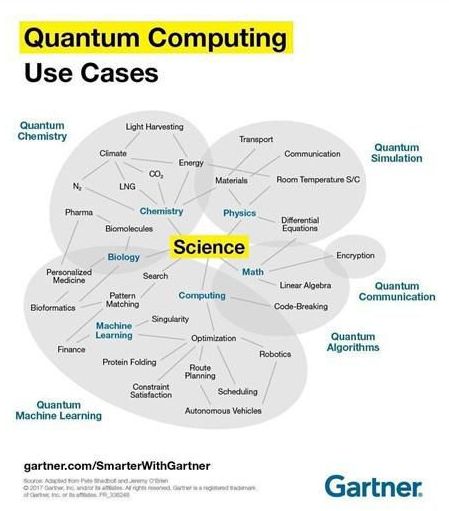
The world of computing has witnessed seismic advancements since the invention of the electronic calculator in the 1960s. The past few years in information processing have been especially transformational. What were once thought of as science fiction fantasies are now technological realties. Classical computing has become more exponentially faster and more capable and our enabling devices smaller and more adaptable.